There is a pattern seen in thousands of households across India.
A family can spend months discussing education, income, farming, travel, weddings, property, and future plans, yet go years without discussing blood pressure, diabetes risk, preventive screening, women’s health, mental well-being, or emergency preparedness. Health is often treated as something to think about later, after everything else is managed.
But health does not wait for a convenient time.
It changes quietly in the background. Blood sugar rises slowly. Hypertension builds without symptoms. Nutritional deficiencies drain energy gradually. Stress becomes chronic. Small warning signs are normalized. By the time a serious diagnosis arrives, the question is no longer “What should we do?” but “Why did we not act earlier?”
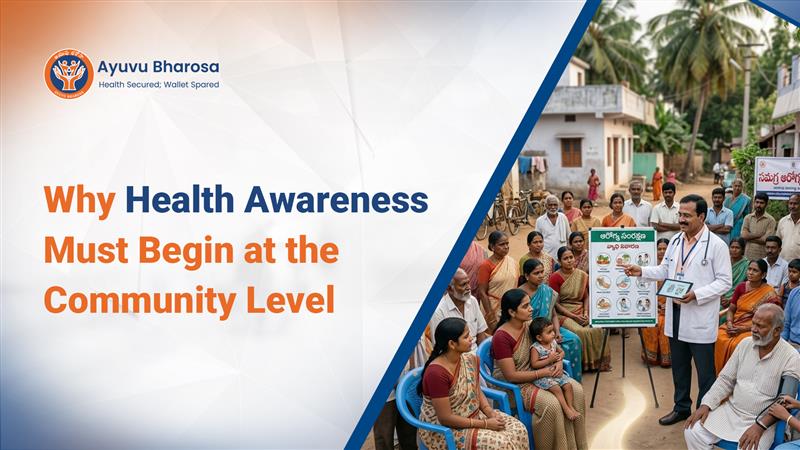
This is why health awareness must begin at the community level.
Not only in hospitals. Not only after illness. Not only during campaigns. It must begin in streets, schools, villages, neighbourhoods, self-help groups, workplaces, local associations, and family conversations. It must live where people make everyday choices.
Because when awareness starts in the community, healthcare becomes part of life instead of a last-minute response to crisis.
Health Awareness Is Not Just Information. It Is Timing.
Many people assume awareness means posters, slogans, or occasional public messages. That is only one small part of it.
Real health awareness means knowing:
- what symptoms should never be ignored
- when to get tested even if you feel fine
- how family history affects risk
- why routine checkups matter
- how lifestyle habits shape long-term outcomes
- what to do during emergencies
- where to seek trusted help quickly
- how to reduce medical expenses through early action
The value of awareness is not in the message itself. It is in the timing of action.
A blood pressure test taken today can prevent a stroke years later.
A sugar screening can prevent complications before they begin.
A breast or cervical screening can detect risk early.
A child’s vaccination can prevent avoidable illness.
A conversation about mental health can stop silent suffering.
That is why awareness is not a soft topic. It is one of the strongest forms of preventive healthcare.
According to the World Health Organization, noncommunicable diseases such as cardiovascular disease, diabetes, cancers, and chronic respiratory disease remain among the leading causes of death globally (WHO). Many of these conditions are strongly linked to prevention, early detection, and timely management.
Why Community-Level Health Awareness Works Better Than Distant Messaging
People do not make health decisions in a vacuum. They make them inside social environments.
A person may ignore a generic advertisement, but listen to a neighbour who detected diabetes early.
A family may skip a city seminar, but attend a local screening camp.
An elder may distrust a random message, but trust a doctor speaking in familiar language nearby.
A woman may postpone care privately, but seek help when community spaces normalize the conversation.
That is the power of local context.
Community-level awareness works because it turns healthcare from something distant into something personal, practical, and immediate.
It succeeds for five important reasons:
Trust Is Local
Trust is one of the biggest drivers of health behaviour.
People are more likely to act when information comes from known doctors, respected community figures, local institutions, or people with shared lived experience.
Relevance Is Higher
Health advice should reflect real life. Food habits, occupation, travel patterns, income cycles, climate, caregiving responsibilities, and language all affect whether advice is useful.
Habits Spread Socially
Healthy behaviour can be contagious in the best way. When one person starts checkups, others follow. When one family tracks sugar levels, others learn. When one community normalizes prevention, participation rises.
Access Becomes Easier
Awareness linked with local screenings, teleconsultations, home sample collection, or nearby services removes friction. Action becomes simpler.
Prevention Becomes Cultural
The goal is not one successful campaign. The goal is a culture where people expect preventive care as a normal part of life.
This is why Health Awareness Programs India need more than broad visibility. They need deep local engagement.
The Hidden Cost of Low Awareness
When communities lack awareness, the damage is not always visible immediately. It appears later in forms that feel disconnected but are deeply related.
Delayed Diagnosis
Conditions that could have been managed early become advanced and expensive.
Financial Shock
Many families can handle regular checkups but struggle with emergency hospitalization.
Productivity Loss
Poor health affects income, attendance, education, and household stability.
Emotional Stress
When illness arrives suddenly, families carry fear, confusion, and decision pressure all at once.
Generational Impact
Children notice how families handle health. If prevention is ignored in one generation, the pattern often repeats in the next.
Low awareness is not only a health issue. It is a social and economic issue.
The World Bank and public health research consistently show that out-of-pocket healthcare spending can push vulnerable families into financial stress, especially when treatment is delayed and acute care becomes necessary (World Bank).
Why This Matters Specifically in Konaseema and East Godavari
Every region has its own strengths and challenges. Konaseema and East Godavari are rich in culture, resilience, enterprise, and strong family networks. But like many growing regions, healthcare needs are evolving quickly.
Today, families are balancing:
- ageing parents who need regular care
- younger generations with sedentary lifestyles
- rising diabetes and blood pressure risk
- seasonal infections
- women delaying screenings due to time constraints
- medication continuity issues
- travel between towns for consultations
- concern over rising treatment costs
In such settings, healthcare cannot depend only on occasional hospital visits.
It must become continuous, accessible, and preventive.
That is why Preventive Health Checkups in Konaseema are becoming increasingly important. A simple annual checkup can reveal trends before symptoms appear. It can detect risk markers, start early treatment, and reduce future costs.
The most powerful diagnosis is often the one found before it becomes serious.
Why Prevention Often Fails Even When People Know It Matters
Many people already understand that prevention is important. Yet action still gets delayed.
Why?
Because real barriers are often practical, not philosophical.
“I Feel Fine”
Many chronic conditions stay silent early on.
“I Don’t Have Time”
Work and family responsibilities always feel more urgent than a test with no symptoms attached.
“I’ll Go Later”
Later becomes months or years.
“What If It Is Expensive?”
Fear of cost prevents even low-cost preventive steps.
“I Don’t Know Where to Start”
Too many options can create paralysis.
This is why awareness alone is not enough. It must be paired with accessible systems that make action easy.
Awareness Without Affordability Is Incomplete
Imagine telling families to get screened regularly, consult specialists, manage chronic conditions, buy medicines consistently, and seek timely treatment, but offering no financial support structure.
That creates awareness without access.
Many households do not delay care because they are careless. They delay care because they are calculating risk against income.
Consultations cost money. Diagnostics cost money. Medicines cost money. Travel costs money. Lost workdays cost money. Admission costs even more.
That is why communities are increasingly comparing traditional policies with newer care models while searching for the Top Family Health Insurance in Konaseema and more practical alternatives that include preventive support.
The future of healthcare is moving from isolated reimbursement models toward connected support ecosystems.
What a Strong Community Health Model Should Include
If awareness is the first step, what should come next?
The best systems combine education with action.
A strong community-focused healthcare model should include:
Preventive Screening
Regular tests before symptoms worsen.
Primary Care Access
Quick consultations for common issues.
Specialist Pathways
Easy escalation when needed.
Cost Protection
Reduced burden during treatment.
Medication Support
Continuity for chronic conditions.
Digital Access
Teleconsultation and remote support.
Follow-Up Care
Recovery after discharge matters.
Long-Term Monitoring
Especially for seniors and chronic patients.
Family Guidance
Health decisions are often family decisions.
Emergency Response
People need to know whom to call and what to do.
This is the difference between fragmented healthcare and continuous healthcare.
Why Membership-Based Health Support Is Growing
Many families are no longer satisfied with systems that help only after major hospitalization. They want support before, during, and after treatment.
That is why interest is growing around practical membership-based healthcare systems.
Families looking for the Top Health Membership Card in East Godavari Community are often asking for more than a card. They are asking for peace of mind.
They want:
- easier access to consultations
- predictable benefits
- preventive checkups
- help with chronic care
- support during emergencies
- fewer administrative hurdles
- services for the whole family
- continuity instead of confusion
The strongest healthcare promise is not “We will help when things go wrong.” It is “We will help you stay well and support you when needed.”
Where Ayuvu Bharosa Becomes Relevant
In this shift toward community-first healthcare, programs designed around local realities become especially meaningful.
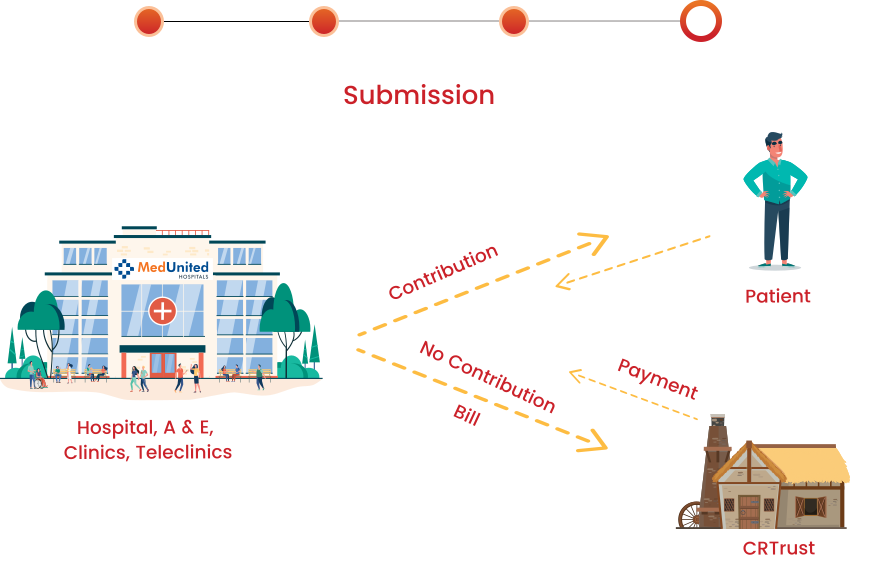
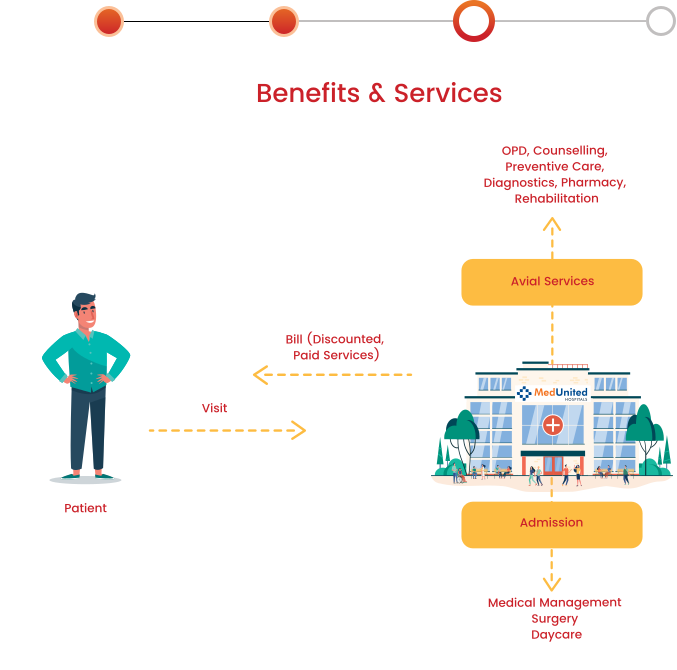
Ayuvu Bharosa was created to support the healthcare needs of the Konaseema community with a model that combines prevention, financial protection, treatment support, and continuity of care.
Instead of treating healthcare as one isolated event, it addresses the full journey:
- preventive health focus
- consultations
- screenings
- financial support during treatment
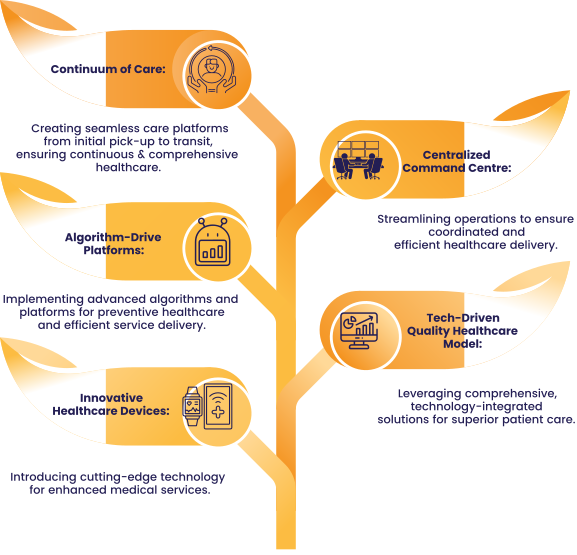
- command centre assistance
- teleconsultation access
- recovery support
- long-term care continuity
That matters because families do not experience health in separate departments. They experience it as one continuous life journey.
The program has already supported thousands of families and members, showing how community-specific models can create real-world impact when designed around actual needs rather than generic assumptions.
The Role of Technology in Community Health
Technology is often misunderstood as something urban or premium. In reality, it can be one of the strongest equalizers when designed well.
Examples include:
- teleconsultations for remote advice
- digital records for continuity
- reminders for medications and tests
- wearable monitoring for high-risk members
- emergency alerts
- faster coordination through command centres
When used properly, technology does not replace doctors or communities. It strengthens both.
The best digital health tools are invisible in daily life but invaluable in critical moments.
What Families Can Do Right Now
Community transformation starts with household decisions.
For Individuals
- Book a basic annual checkup
- Learn your blood pressure and sugar numbers
- Improve sleep and movement habits
- Stop normalizing persistent symptoms
For Parents
- Track vaccination schedules
- Model healthy routines for children
- Teach health literacy early
For Women
- Prioritize screenings and routine care
- Do not place personal health permanently last
For Senior Citizens
- Review medicines regularly
- Monitor chronic conditions consistently
- Seek preventive care, not only crisis care
For Communities
- Organize screening camps
- Share verified health information
- Promote elder and women’s health discussions
- Encourage annual family health planning
Small habits repeated across many homes create major public health change.
The Real Meaning of Community Health
Community health is not only about hospitals, ambulances, or schemes.
It is about whether a person knows when to seek help.
It is about whether a mother can afford timely treatment.
It is about whether an elder gets monitored consistently.
It is about whether a child grows up seeing prevention as normal.
It is about whether families face illness with support instead of panic.
When awareness begins locally, health outcomes improve quietly but powerfully.
Fewer emergencies.
Earlier diagnoses.
Lower financial strain.
Better recovery.
Stronger families.
That is how healthier regions are built.
Not through one campaign.
Not through one hospital visit.
Not through one speech.
But through thousands of informed choices made inside everyday communities.
If you are looking for a practical, family-focused healthcare support system built for Konaseema and East Godavari, explore Ayuvu Bharosa and see how community-first healthcare can create lasting change.