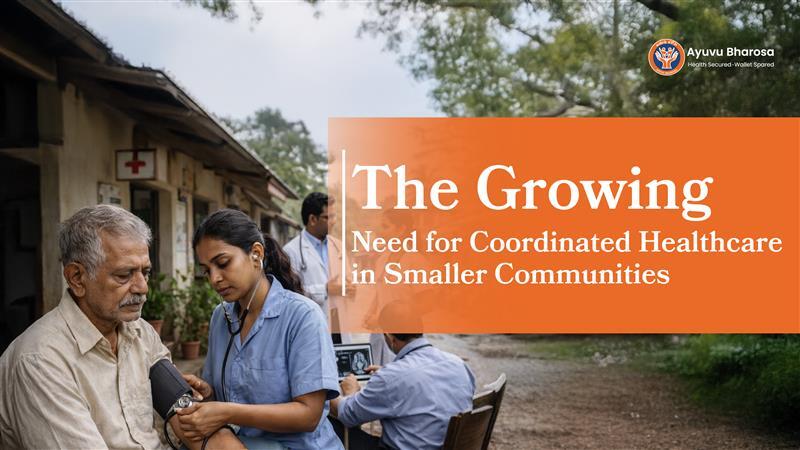
Healthcare is often described as a basic necessity, something that should be accessible, reliable, and consistent for everyone. But in smaller communities, the experience of healthcare is rarely that simple. It is shaped by a series of decisions, delays, and uncertainties that influence when and how people seek care.
In regions like Konaseema, the issue is not the complete absence of healthcare facilities. Clinics exist, hospitals function, and doctors are available. Yet, the journey of a patient within this system often feels fragmented. People hesitate not because they do not value their health, but because they are unsure of what lies ahead once they step into the system. Questions around cost, continuity, and clarity often outweigh the urgency of symptoms.
This is where the real gap begins. The challenge is no longer just about availability. It is about coordination. And this is why the conversation around Rural Healthcare Services India needs to shift from infrastructure to experience.
When Healthcare Feels Like a Series of Disconnected Steps
For many individuals in smaller communities, accessing healthcare is not a smooth process. It involves navigating multiple touchpoints that are rarely connected to each other. A person may consult a doctor, only to be referred elsewhere for diagnostics, and then again to another facility for specialised care. Each step introduces additional effort, time, and financial burden.
More importantly, there is no structured system guiding the patient through this journey. Medical records are often scattered, follow-ups depend entirely on individual initiative, and there is little to no continuity in care.
This fragmentation creates a silent barrier. It discourages early intervention and leads to delays that could have been avoided. Over time, it transforms manageable health conditions into serious medical concerns.
The Reality of Healthcare in Konaseema
The healthcare landscape in Konaseema reflects a combination of systemic gaps that collectively impact outcomes. While primary care is relatively accessible, advanced and preventive care remain inconsistent.
Several key challenges define this reality:
- Limited access to critical care and super speciality services
- Low adoption of preventive healthcare practices
- Limited awareness around early detection and screenings
- Minimal use of telemedicine and digital health tools
- Lack of structured rehabilitation and long-term care
- Almost non-existent mental health support systems
These challenges are interconnected. A lack of preventive care leads to late diagnoses. Limited specialist access delays treatment. Absence of follow-up increases the risk of complications.
Healthcare spending in India continues to rely heavily on individual contributions, with out-of-pocket expenses forming a major share of total costs (WHO).
In smaller communities, this reality is even more pronounced, placing significant financial pressure on families.
The Financial Burden Behind Every Health Decision
In regions where a majority of households depend on agriculture, income is often seasonal and unpredictable. Healthcare expenses, however, are immediate and unavoidable. This mismatch creates a situation where medical decisions are influenced more by affordability than by urgency.
Families often delay consultations, postpone diagnostic tests, or opt for temporary solutions instead of comprehensive treatment. Over time, this leads to a cycle where conditions worsen and treatment becomes more expensive.
Healthcare expenses remain one of the leading causes of financial stress among Indian households (WorldBank). This highlights a critical issue. Healthcare is not just a service. It is a financial event that can significantly impact long-term stability.
Why Preventive Healthcare Remains Limited
Preventive healthcare has the potential to transform outcomes, yet its adoption in smaller communities remains low. The issue is not a lack of awareness alone, but the absence of systems that make preventive care accessible and consistent.
Effective prevention requires:
- Regular health monitoring and tracking
- Structured screening programs
- Guidance on lifestyle and nutrition
- Continuous follow-up and evaluation
Without these elements, preventive care becomes occasional rather than routine.
Preventive care has been consistently shown to reduce long-term healthcare costs when implemented effectively (NITI), yet it remains underutilized in many rural settings.
What Coordinated Healthcare Actually Looks Like
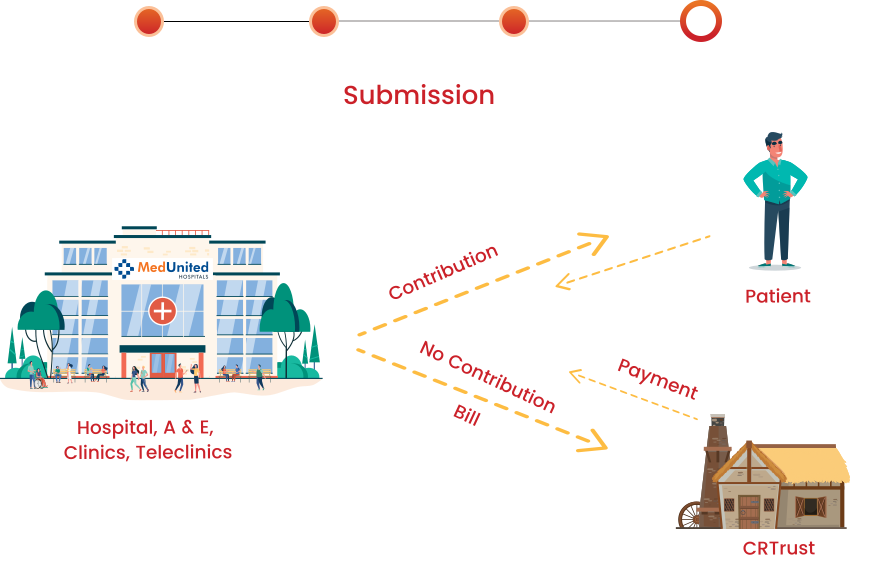
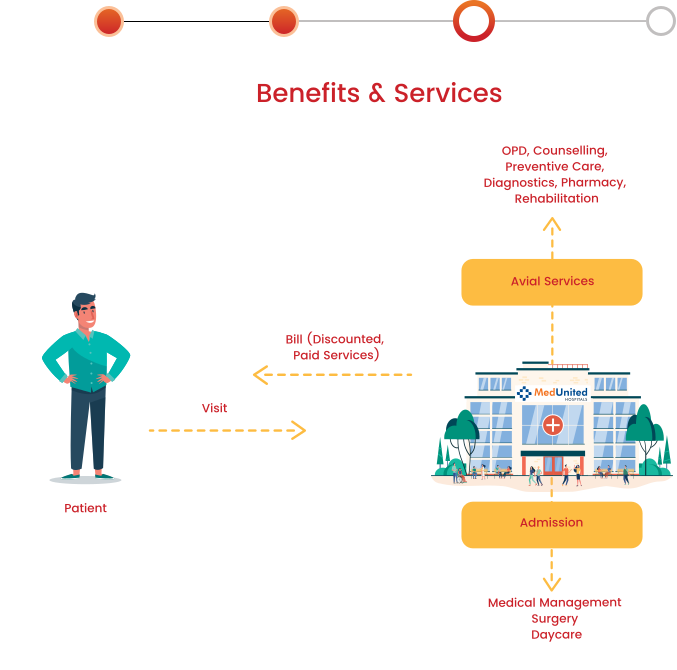
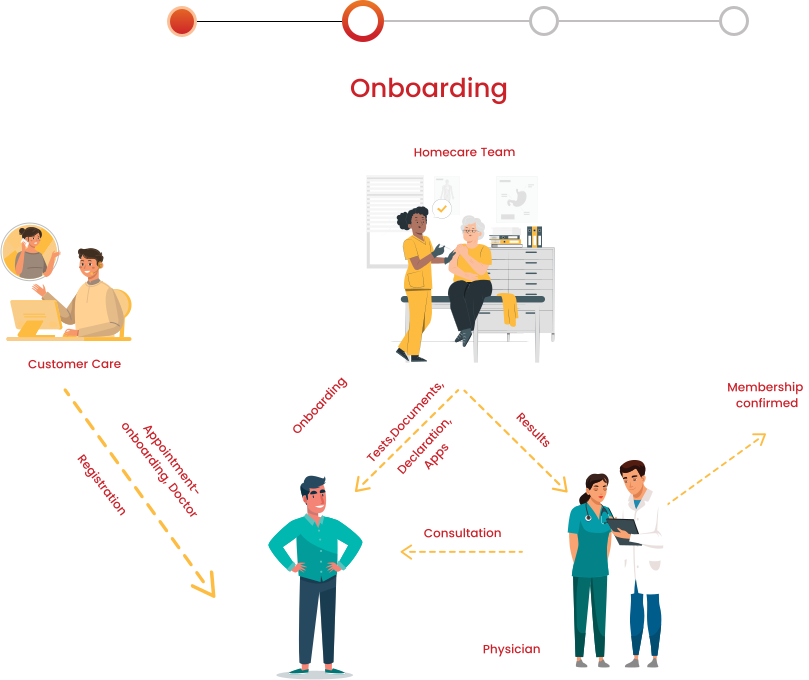
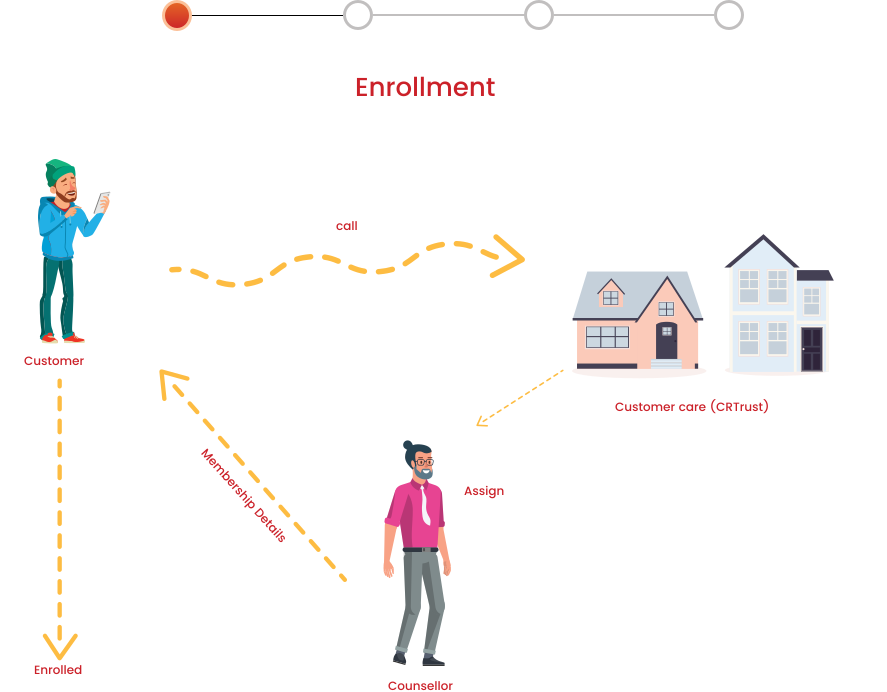
Coordinated healthcare addresses these challenges by creating a connected system where every stage of care is aligned. Instead of isolated interactions, it offers a continuous journey that supports individuals from prevention to recovery.
In a coordinated system, healthcare includes:
- Early risk assessment and health profiling
- Access to general practitioners, specialists, and super speciality services
- Integration of diagnostics, consultations, and treatment plans
- Continuous monitoring through digital tools and support systems
- Structured follow-up care and rehabilitation
This approach reduces uncertainty and ensures that patients are not left to manage their healthcare journey alone.
A Shift Towards Structured Healthcare Models
As these challenges become more visible, there is a growing shift towards structured healthcare solutions such as the Best Health Membership Card in East Godavari. These models are designed to simplify healthcare access while ensuring continuity and financial protection.
Unlike traditional systems that operate in isolation, these models bring multiple services under one framework. They focus on:
- Providing clarity in healthcare access
- Reducing financial unpredictability
- Ensuring continuity across different stages of care
They are built around real-world needs, making them particularly relevant for smaller communities.
Affordable Healthcare Access in Konaseema Needs Redefinition
The concept of Affordable Healthcare Access in Konaseema should not be limited to reducing costs. True affordability lies in creating systems that are predictable, accessible, and consistent.
An effective healthcare system must:
- Minimize unexpected financial burdens
- Provide clear and transparent coverage
- Ensure easy access to necessary services
- Support patients throughout their healthcare journey
Integrated healthcare models are beginning to address these needs by combining preventive care, treatment, and financial support into a single ecosystem.
Where Structured Healthcare Is Already Making a Difference
In Konaseema, structured healthcare initiatives have already started showing measurable impact by addressing gaps in access, affordability, and continuity.
- 2,757 families supported
- 6,763 members covered
- 5000+ beneficiaries served
- Over ₹2.66 crore in healthcare support delivered
These numbers represent more than scale. They reflect improved access to timely care, reduced financial stress, and better overall health outcomes for communities.
At the same time, such initiatives have begun addressing deeper gaps like preventive care, specialist access, and long-term health monitoring, which were previously limited or unavailable.
The Growing Importance of Family-Centric Healthcare
Healthcare decisions in smaller communities are often made at the family level rather than individually. This makes solutions like the Top Health Card for Family in East Godavari increasingly relevant.
Family-centric healthcare models ensure that:
- Coverage extends across all members
- Health risks are managed collectively
- Financial protection is shared
- Care remains consistent for everyone
This approach not only improves accessibility but also strengthens long-term health outcomes for entire households.
The Future of Healthcare in Smaller Communities
Healthcare in smaller communities is at a critical turning point. The focus is gradually shifting from building infrastructure to building systems that are more responsive, integrated, and sustainable.
The future lies in creating healthcare models that:
- Emphasize prevention over reaction
- Integrate services across different levels of care
- Provide continuous support rather than one-time treatment
- Reduce financial burden while improving outcomes
This shift is essential to ensure that healthcare becomes reliable and accessible for everyone, regardless of location.
A More Structured Way Forward
For individuals and families navigating healthcare in smaller communities, the need for a dependable and well-coordinated system has never been greater. A system that brings together prevention, treatment, and financial protection can significantly reduce both health risks and financial uncertainty.
If you are looking to explore such a structured approach, you can learn more about
(Best Health Membership Card in East Godavari)
Because healthcare should not depend on how well you navigate complexity.
It should depend on how well the system supports you.